TensorNova
An industrial AI server manufacturer designs and builds computing systems for demanding factory environments. These systems support machine vision, predictive maintenance, robotics, digital twins, and real-time quality inspection. Unlike standard data-center servers, industrial AI servers must handle heat, vibration, dust, limited network access, and continuous operation.
NVIDIA founder and CEO Jensen Huang described this direction clearly: “The world’s companies are going to build their own AI factories.” His statement reflects a major shift. Manufacturers are no longer sending every decision to distant cloud platforms. They are placing GPU servers, rugged storage, and high-speed networking closer to production lines. A trained vision model can then identify a scratched metal part within milliseconds, while sensors track motor temperature beside the machine.
The best industrial AI server manufacturer does more than install powerful processors. It matches hardware with workload, operating conditions, maintenance plans, and safety requirements. Engineers may test airflow at 45°C, inspect cable protection, and measure inference performance under constant load. Reliability is practical, not decorative.
Still, no system is perfect.
A server can pass laboratory tests and fail beside an oily stamping press. A model can detect defects accurately but produce too many false alarms. These weaknesses deserve honest review. Buyers should examine thermal design, remote management, warranty coverage, cybersecurity controls, and long-term component availability. They should also request field evidence, not only impressive benchmark numbers. Choosing the right supplier is therefore a technical and operational decision, not simply a search for the fastest GPU.
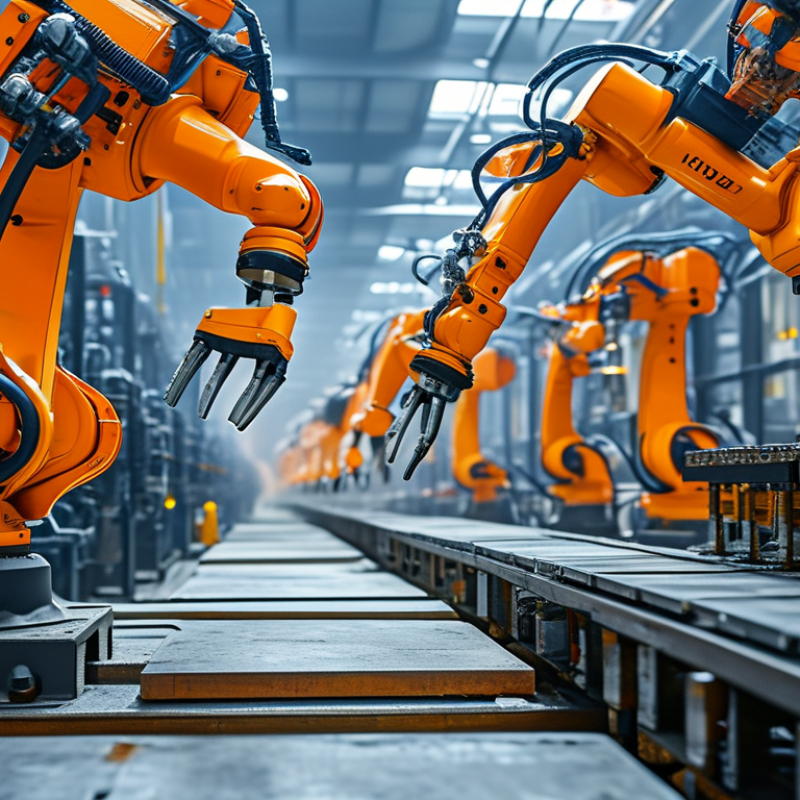
What Is an Industrial AI Server Manufacturer?
An industrial AI server manufacturer designs and builds computing systems for demanding production environments. Its role goes beyond assembling processors, memory, and storage. It must understand factory workflows, machine data, heat, dust, vibration, and limited network access. These servers often support visual inspection, predictive maintenance, robotics, and real-time process control. A reliable manufacturer selects suitable CPUs, GPUs, ECC memory, and storage for each workload. It also engineers airflow, power protection, chassis strength, and long-term service access.
Experience matters here. A server may perform well in a quiet test room but fail beside a hot production line. Manufacturers should validate thermal behavior, component compatibility, operating stability, and remote monitoring. They should document test methods clearly. They should also explain performance limits instead of promising unrealistic results. No design is perfect. Some systems still need better cooling, simpler upgrades, or stronger protection against vibration. That honest reflection supports informed purchasing decisions.
Tips: Ask for workload-based testing, not only benchmark scores. Check operating temperature ranges, repair procedures, spare-part availability, and software support. Confirm whether the system can process data locally when the network is unavailable. Review security updates and access controls before installation. Small details matter. A practical manufacturer listens to operators, engineers, and maintenance teams before finalizing the server configuration.
An industrial AI server manufacturer builds computing systems for demanding factory environments. These systems process camera feeds, sensor readings, and machine data near the production line. Unlike office servers, they must handle vibration, dust, heat, and continuous operation.
The processor manages general workloads, while GPUs or dedicated AI accelerators handle neural-network inference. Error-correcting memory helps prevent silent data corruption during long shifts. High-speed NVMe storage supports rapid model loading and local data capture. Industrial Ethernet, time-sensitive networking, and multiple communication ports connect servers with robots, controllers, and inspection equipment.
Cooling design matters greatly. Manufacturers may use filtered airflow, heat pipes, or sealed enclosures, depending on site conditions. Redundant power supplies can reduce downtime, but they also increase cost and heat. Secure boot, hardware encryption, and trusted platform modules protect models and operational data. Remote monitoring can reveal rising temperatures, storage wear, or unusual processor loads before failure occurs.
Real installations often expose weaknesses that laboratory tests miss. A server may meet performance targets yet struggle beside a furnace or inside a crowded cabinet. Careful validation should include dust levels, network delays, maintenance access, and recovery testing. No design is perfect. Engineers must balance computing power, reliability, serviceability, and energy use for each production environment.
An industrial AI server manufacturer builds computing systems for demanding factory environments. These systems process camera feeds, sensor data, and machine signals near the production line. Design begins with workload analysis, not with a fixed hardware list. Engineers estimate model size, inference speed, storage needs, and operating temperature. A server for visual inspection may need strong GPU acceleration and fast data movement. A control cabinet may require a compact design with vibration resistance.
Manufacturing involves careful integration. Technicians install processors, memory, accelerators, power supplies, and cooling assemblies. They inspect cable routing because poor airflow can reduce system stability. Burn-in testing then runs the server under heavy loads for many hours. Engineers check temperature changes, fan behavior, power consumption, and restart performance. Firmware and operating systems are also configured for reliable edge deployment. Small details matter. A loose connector can interrupt a complete inspection line.
Tips: Ask for workload testing with your real models and data. Check thermal performance at the highest expected ambient temperature. Request clear maintenance procedures and replacement guidance. Do not judge reliability from specifications alone. Field conditions can expose weaknesses that laboratory tests miss. Engineers should document every test result, although records are sometimes incomplete. That gap deserves attention. A dependable manufacturer keeps improving designs after failures, because industrial environments rarely behave perfectly.
What Is an Industrial AI Server Manufacturer?
An industrial AI server manufacturer develops computing systems for demanding operational environments. These systems support machine vision, predictive maintenance, robotics, and real-time process monitoring. Unlike ordinary office servers, industrial models must handle vibration, dust, heat, and unstable network connections.
Factory floors often use AI servers beside production lines. Cameras inspect welds, labels, surfaces, and assembly errors within milliseconds. Predictive maintenance models study motor vibration, temperature, and power consumption. This can reveal bearing wear before an unplanned shutdown. Robotics systems also require low-latency inference, especially when people and machines share working zones. Small delays matter.
Deployment conditions vary greatly. Warehouses may need compact edge servers near scanners and autonomous vehicles. Energy facilities often require rugged systems inside remote substations or control rooms. Transport infrastructure may place servers in roadside cabinets with limited cooling. Reliable designs usually include error-correcting memory, redundant power, secure remote management, and industrial communication interfaces. Enclosures may need protection against dust, moisture, and vibration.
Field experience shows that hardware is only one part of success. Sensor quality, model accuracy, and maintenance procedures can limit performance. A powerful server cannot repair poor data. Sometimes, a smaller edge system works better because it reduces network delay. However, thermal planning is frequently underestimated. Even a brief temperature spike can reduce reliability. Deployment teams should test workloads under realistic conditions, not only in clean laboratory environments. That lesson is easy to overlook.
Industrial AI server manufacturers design computing systems for demanding workloads such as machine vision, vibration analysis, acoustic monitoring, and process control. These systems are commonly deployed at the factory edge, in control rooms, or in industrial data centers where low latency, reliability, and continuous operation are essential.
The chart shows representative input sampling or processing rates used in industrial AI deployments. Machine vision commonly uses video rates around 30 frames per second, vibration monitoring often uses approximately 12.8 kHz, acoustic monitoring frequently uses 48 kHz audio, and process telemetry may be collected once per second. Actual requirements vary by sensor, equipment, and control objective.
An industrial AI server manufacturer builds computing systems for demanding factory environments. Evaluation should begin with real operating conditions, not attractive specifications. Ask how the server performs beside heat, dust, vibration, and unstable network connections. A credible manufacturer provides test data from comparable industrial sites. Factory experience matters.
Technical capability should cover processors, accelerators, memory capacity, storage durability, and expansion options. The system must process sensor streams with predictable latency. Cooling design deserves close inspection. A quiet laboratory result may change near a furnace. Check thermal records under continuous workloads, not short demonstrations. Power efficiency also affects operating costs and maintenance planning.
Reliability depends on more than hardware. Look for documented failure rates, component traceability, firmware controls, and clear security practices. Independent certifications can support confidence, but they should match the intended region and application. Examine warranty terms, repair procedures, spare-part availability, and response times. Ask for customer references with measurable results. Vague promises are warning signs.
No checklist is perfect. A manufacturer may pass thermal tests yet provide weak deployment support. Another may offer excellent service but limited upgrade flexibility. Evaluation teams should record evidence, identify assumptions, and repeat tests with their own workloads. Transparent limitations often reveal more professionalism than exaggerated claims. The strongest partner explains what the server cannot do, how performance may degrade, and which safeguards keep industrial operations stable.
I server manufacturer do?
Industrial servers face heat, dust, vibration, and continuous operation. A quiet office test cannot represent a furnace-side cabinet. Factory systems may need stronger chassis protection and filtered airflow.
Processors manage general tasks. GPUs or dedicated accelerators handle neural-network inference. ECC memory helps reduce silent data errors during long shifts. Fast NVMe storage supports model loading and local data capture.
Poor airflow can raise temperatures and reduce system stability. Engineers may use heat pipes, filtered fans, or sealed enclosures. These choices depend on dust levels and cabinet space. More cooling can increase noise, cost, and energy use.
Many systems can process data locally during network interruptions. This supports inspection and monitoring near the production line. Buyers should confirm local storage, recovery behavior, and delayed data transfer. Network independence is useful, but not always complete.
Testing may include heavy workloads, thermal checks, power monitoring, and restart tests. Burn-in testing runs the system for many hours. Engineers should also test vibration, dust, network delays, and maintenance access.
Ask for testing with real models and production data. Review operating temperature ranges, service procedures, spare-part access, and software support. Check remote monitoring features. Benchmark scores alone can mislead.
No design is perfect. Some systems may need better cooling, easier upgrades, or stronger vibration protection. Test records can also be incomplete. That gap deserves attention. Field failures often reveal problems laboratory tests missed.
An industrial ai server manufacturer is a specialized company that develops and produces computing systems for demanding industrial environments. Unlike standard data-center equipment, these servers are designed to support artificial intelligence workloads such as machine vision, predictive maintenance, robotics, process optimization, and real-time data analysis. They combine high-performance processors, accelerators, memory, storage, networking, thermal management, and rugged enclosures to deliver reliable operation near machines, production lines, and remote facilities.
The design and manufacturing process typically emphasizes durability, efficient cooling, flexible configuration, long service life, and compatibility with industrial control systems. These servers may be deployed in factories, logistics centers, energy facilities, transportation systems, and other environments where space, temperature, vibration, and connectivity can be challenging. When evaluating an industrial ai server manufacturer, organizations should consider computing performance, system stability, environmental protection, security, expandability, lifecycle support, customization capabilities, testing procedures, and compliance with relevant technical standards. A strong manufacturer provides dependable hardware and engineering support that helps businesses implement scalable and maintainable AI infrastructure.