 TensorNova
TensorNova
TensorNova
Choosing an edge AI server manufacturer is no longer a simple comparison of processor names. Global buyers must examine performance, reliability, regional support, and long-term operating costs. A server processing factory-camera footage needs different strengths from one supporting retail analytics or autonomous inspection.
Gartner research vice president Bob Gill once stated, “By 2025, 75% of enterprise-generated data will be created and processed outside traditional, centralized data centers.” That prediction highlights why edge infrastructure matters. Data is increasingly produced beside machines, vehicles, hospitals, stores, and remote facilities. The right supplier must therefore deliver more than powerful GPUs. It should provide compact systems, dependable thermal design, low-latency networking, remote management, security controls, and clear warranty terms.
This guide evaluates leading manufacturers through those practical requirements. It considers GPU and accelerator options, memory capacity, storage endurance, chassis durability, software compatibility, and deployment flexibility. It also examines supply-chain reach, technical service, certifications, and replacement support across major markets. Details matter. A dusty warehouse, a hot roadside cabinet, or an unstable network can expose weaknesses that laboratory benchmarks miss.
No ranking is permanent. Buyer priorities differ.
A cheaper server may consume more power. A famous brand may offer limited customization. Even this framework has limits, because product availability changes by region and application. Still, careful comparison can reduce expensive surprises. The strongest edge AI server manufacturer is not always the one with the highest benchmark score. It is the partner that keeps inference stable, maintainable, and commercially useful after installation.
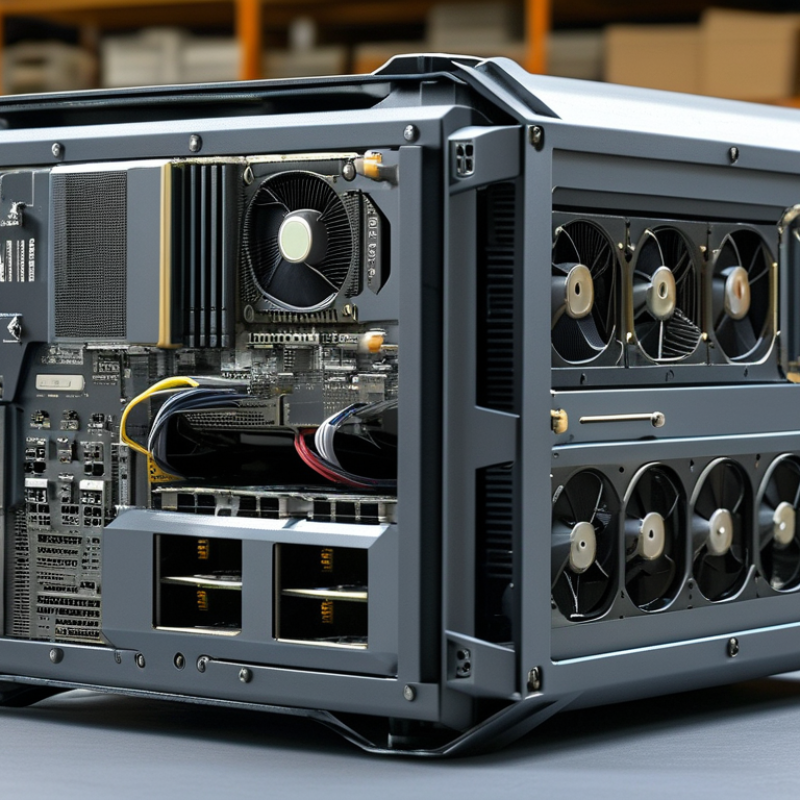
A leading edge AI server manufacturer understands that performance begins at the deployment site. Its engineers study model size, response targets, power limits, and network conditions before recommending hardware. Strong designs combine efficient accelerators, fast memory, reliable storage, and balanced data movement. Raw computing power is not enough.
Practical experience matters. Manufacturers should provide benchmark results from similar workloads, not only laboratory figures. Tests should show latency, throughput, energy use, and performance under sustained heat. Clear documentation helps buyers verify these claims. It should explain supported frameworks, cooling requirements, expansion options, and maintenance procedures. Small details matter, such as tool-free component access and readable system alerts.
Reliability also depends on long-term support. A trustworthy manufacturer offers controlled firmware updates, security guidance, spare-part planning, and responsive technical assistance. Its warranty terms should be easy to understand. Independent validation, industry certifications, and customer deployment evidence strengthen credibility. Yet no solution is perfect. Some systems may perform well but consume more power than expected. Others may be efficient but difficult to upgrade. Buyers should question impressive numbers and request realistic trial data. A careful manufacturer welcomes that scrutiny.
| Evaluation Dimension | Compact Edge AI Node | Performance Edge AI Server | Rugged or Industrial Edge Server | Buyer Verification Metric |
|---|---|---|---|---|
| Typical AI Workload | Video analytics, object detection, gateway inference, and small language models | Multi-camera analytics, computer vision, robotics, digital twins, and real-time generative AI inference | Autonomous machines, transportation systems, industrial inspection, and remote-site inference | Measured inference latency, throughput, and concurrent stream count |
| Accelerator Configuration | One low-profile GPU, AI accelerator, or integrated accelerator | One to four data-center or workstation-class accelerators, depending on chassis and power budget | One or more low-profile, fanless, or vibration-tolerant accelerators | Supported accelerator list, thermal design power, driver support, and upgrade path |
| Host Processor | Usually 4 to 16 CPU cores | Usually 16 to 64 high-performance CPU cores | Usually 4 to 32 CPU cores selected for extended-temperature operation | CPU architecture, core count, virtualization support, and sustained performance |
| System Memory | 32 GB to 128 GB, commonly with ECC support | 128 GB to 1 TB ECC memory, depending on workload and accelerator design | 16 GB to 256 GB ECC or industrial-grade memory | Maximum capacity, memory channels, ECC behavior, and field-replaceability |
| Local Storage | One or more NVMe SSDs, commonly 512 GB to 4 TB | Multiple NVMe SSDs with RAID or hot-swap options, commonly 2 TB to 30 TB | Industrial SSDs with data-protection features and optional removable storage | Sequential and random I/O, endurance rating, RAID support, and encryption |
| Network Connectivity | 1 GbE or 2.5 GbE, with optional 10 GbE | 10 GbE to 100 GbE, with optional fiber, RDMA, or time-sensitive networking | 1 GbE to 25 GbE, plus optional fieldbus, serial, wireless, or cellular connectivity | Port count, bandwidth, latency, redundancy, and protocol compatibility |
| Expansion Capability | Limited PCIe or M.2 expansion in a small chassis | Multiple PCIe Gen4 or Gen5 slots for accelerators, networking, and storage | Shock-resistant expansion slots with restrained cable routing and locking connectors | Available slot width, lane allocation, mechanical clearance, and service access |
| Power Consumption | Approximately 100 W to 500 W under sustained workload | Approximately 500 W to 2,000 W, depending on accelerator count and configuration | Approximately 100 W to 1,000 W, with DC or redundant power options available | Peak and sustained power draw, input voltage, efficiency, and power redundancy |
| Thermal Design | Active air cooling with compact heat sinks and controlled airflow | High-airflow cooling, accelerator-specific thermal zones, or liquid-assisted options | Filtered, sealed, conduction-cooled, or extended-temperature cooling designs | Operating temperature range, derating curve, acoustic level, and dust protection |
| Physical Form Factor | Embedded, desktop, short-depth, or small rack-mount chassis | Typically 1U to 4U rack-mount or tower chassis | Wall-mount, vehicle-mount, panel-mount, or reinforced rack-mount chassis | Dimensions, weight, mounting method, ingress protection, and vibration tolerance |
| Reliability Features | ECC memory, watchdog controls, remote restart, and replaceable storage | Redundant power supplies, hot-swappable drives, hardware monitoring, and serviceable fans | Shock and vibration resistance, conformal protection options, sealed connectors, and wide-voltage input | MTBF methodology, component lifecycle, environmental test reports, and spare-parts availability |
| Operating Environment | Controlled indoor locations such as retail, offices, and server closets | Enterprise edge sites, factories, laboratories, and telecommunications facilities | Vehicles, outdoor enclosures, factories, energy sites, and remote infrastructure | Certified operating temperature, humidity, altitude, shock, vibration, and EMC limits |
| Software Compatibility | Linux or Windows with container runtime and standard AI inference frameworks | Linux-based virtualization, containers, orchestration, and model-serving platforms | Linux, real-time operating systems, containerized applications, and industrial middleware | Supported OS versions, driver lifecycle, container compatibility, and framework support |
| Security Architecture | Secure boot, TPM, encrypted storage, and signed firmware | Hardware root of trust, secure boot, confidential computing options, and centralized key management | Tamper monitoring, secure boot, encrypted communications, and offline update controls | TPM version, firmware-signing process, vulnerability response, and compliance documentation |
| Remote Management | Basic out-of-band monitoring and remote power control | Full out-of-band management, telemetry, firmware updates, and fleet-level monitoring | Remote diagnostics through wired, wireless, or cellular links with offline recovery support | Management interface, API support, alerting, logging, and zero-touch deployment capability |
| Global Deployment Readiness | Regional power adapters, multilingual documentation, and standard warranty service | International certifications, regional support coverage, standardized configurations, and logistics planning | Country-specific certifications, rugged packaging, long-term supply commitments, and field service | Safety and EMC certifications, warranty terms, support response time, and local service coverage |
| Lifecycle Management | Typical commercial lifecycle of approximately 3 to 5 years | Longer lifecycle options with controlled component changes and spare-parts planning | Long-term availability designed for industrial deployments, often 5 years or more | Product change notification policy, availability commitment, repairability, and upgrade options |
| Manufacturer Differentiator | Low power consumption, compact size, simple deployment, and competitive total cost | High AI performance, scalable expansion, enterprise management, and strong service capability | Environmental durability, stable supply, application customization, and field maintainability | Total cost of ownership, validated workload performance, deployment risk, and service quality |
I server manufacturer understand before recommending hardware?
Balanced data movement, fast memory, storage, cooling, and software support also affect performance. More power can create more heat.
Request latency, throughput, energy use, and sustained performance under realistic workloads. Laboratory results may mislead. Ask for trial data.
Industrial systems may face vibration, dust, unstable temperatures, and restricted airflow. Check the cabinet before ordering.
Documentation should cover frameworks, cooling needs, expansion options, maintenance, alerts, and component access. Readable instructions save time.
Technicians may not reach every site quickly, especially across factories, transport routes, or remote infrastructure. Clear alerts support faster recovery.
Examine firmware updates, security guidance, warranty terms, spare-part planning, and regional technical assistance. Support can decide total ownership cost.
Retail sites need compact, efficient systems for cameras and inventory. Healthcare sites need data protection, audit controls, and system integration.
Verify airflow, enclosure space, power use, noise, certifications, software compatibility, and local service capacity. No platform fits every site. I might still miss something.
Choosing the right edge AI server manufacturer is essential for organizations that need fast, secure, and reliable data processing close to where information is generated. Leading manufacturers typically combine advanced computing performance, efficient thermal design, flexible configurations, strong security, and dependable long-term support. When comparing vendors, global buyers should evaluate processing capabilities, memory capacity, connectivity, power efficiency, system durability, software compatibility, customization options, certifications, delivery capacity, and total ownership cost.
Different industries and deployment scenarios require different strengths. Smart manufacturing may prioritize real-time analytics and industrial durability, while transportation, healthcare, retail, and energy applications may emphasize compact design, data privacy, remote management, or continuous operation. To select the right supplier, buyers should clearly define workload requirements, deployment environments, expansion plans, service expectations, and regional compliance needs. A careful comparison of technical performance, product lifecycle support, supply reliability, and communication quality can help organizations establish a dependable edge AI infrastructure that delivers consistent value across global operations.
