TensorNova
Choosing a machine learning server manufacturer is not simply a matter of comparing processor names or advertised speeds. A reliable decision begins with the workload: model size, training frequency, dataset volume, and expected user demand. A research team training computer vision models may need multiple GPUs, fast NVMe storage, and strong cooling. A small analytics group may value quiet operation, manageable power use, and simpler maintenance.
Practical evaluation should examine GPU compatibility, PCIe expansion, memory capacity, network throughput, warranty terms, and technical support. Ask for verifiable benchmarks, not vague claims. Check whether the manufacturer publishes thermal results under sustained workloads. Confirm how quickly replacement parts can arrive. These details become important when a failed fan stops a training job overnight.
A trustworthy supplier should explain its design choices clearly. It should provide documentation, firmware guidance, security updates, and references from comparable customers. Independent reviews and transparent testing can strengthen that evidence. Still, no checklist is flawless. A highly optimized server may be too expensive for a growing team. An affordable system may create hidden costs through energy use or difficult upgrades.
The best choice depends on balanced judgment, not impressive specifications alone. Compare total ownership cost, expected workload changes, and the manufacturer’s long-term reliability. Speak with engineers who will operate the system daily. Their practical concerns may reveal more than a polished sales presentation. Look beyond launch-day performance. Consider the entire working life of the server.
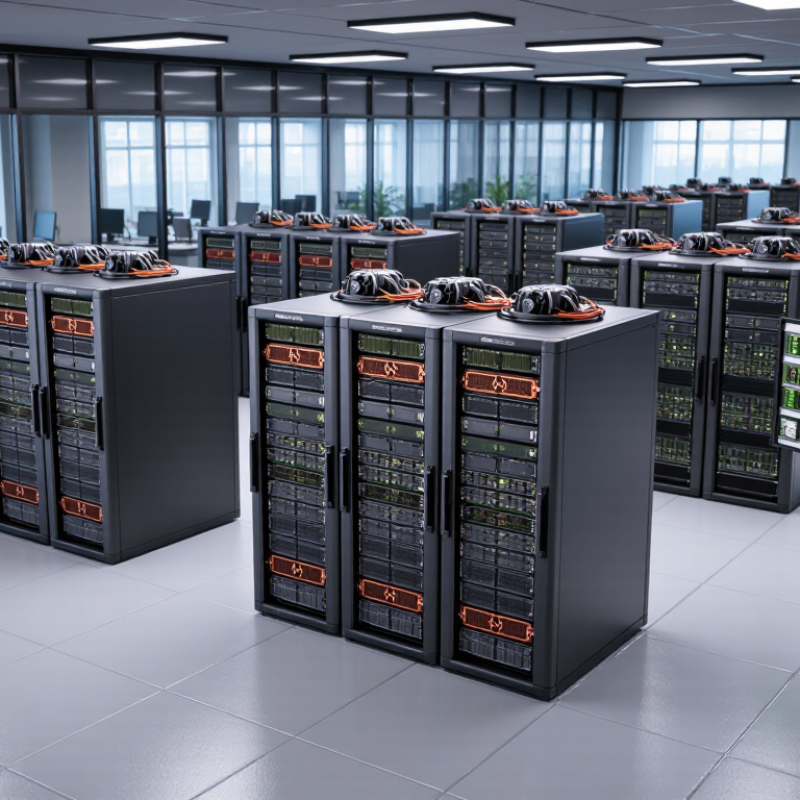
Choosing a machine learning server manufacturer starts with defining your workload clearly. Measure model size, training frequency, inference traffic, and acceptable response time. A vision model may need several GPUs, while tabular prediction may run well on fewer accelerators. Record dataset volume and growth rate. A server that fits today may feel cramped next quarter. Include preprocessing, storage, and backup capacity in your estimate. In real deployments, teams often underestimate data movement. That mistake can leave expensive hardware waiting.
Define performance targets with numbers, not vague promises. Specify training time, concurrent users, latency, and uptime requirements. Check whether your software supports the selected processor, accelerator, memory, and operating environment. Ask manufacturers for tested workload results, power limits, cooling details, and service response terms. Independent test conditions matter. A dramatic benchmark may use a smaller dataset than yours. Review upgrade paths, warranty coverage, remote monitoring, and spare-part availability. Reliability includes the hours after installation, not only delivery day.
Tips: Build a small pilot with representative data. Measure GPU utilization, memory pressure, disk speed, and energy use. Leave room for growth. Do not size every component at its maximum; that can waste budget and cooling capacity. I once treated peak usage as normal usage, and the estimate became unnecessarily large. That experience still deserves review. Keep a written requirements sheet, then ask each manufacturer identical questions. Clear evidence beats polished sales language.
How to Choose a Machine Learning Server Manufacturer?
Manufacturer expertise matters as much as hardware specifications. A capable supplier should understand model training, inference, data pipelines, and accelerated computing. Ask for deployment examples that resemble your workload. Generic benchmarks can hide important weaknesses. Stanford’s 2024 AI Index estimated that training GPT-4 required about 25,000 accelerator chips and cost roughly 78 million dollars. That scale makes system design, thermal management, and supply planning critical. Experience shows up in practical details.
Inspect the product capabilities closely. Compare accelerator compatibility, memory capacity, storage throughput, networking, cooling, and remote management tools. MLPerf Training results can help evaluate performance across standardized workloads, but they should not be treated as final proof. Your data size and software stack may produce different results. Test a representative model before signing a large contract. Small tests matter.
Power efficiency deserves equal attention. The International Energy Agency reported that data centers consumed about 415 terawatt-hours globally in 2024. A faster server may still create higher operating costs if its energy use is excessive. Ask manufacturers for measured performance per watt, service response times, firmware policies, and spare-part availability. I would not trust vague claims such as “AI-ready.” They sound impressive, but they lack evidence. A careful comparison may reveal that the most powerful system is not the most reliable choice.
| Evaluation Dimension | What to Verify | Manufacturer Profile | Product Capability and Evidence to Request |
|---|---|---|---|
| Machine Learning Design Expertise | Review the manufacturer’s experience with training, inference, fine-tuning, and high-performance computing workloads. | Specialized | Provides workload-specific configuration guidance, accelerator topology planning, performance estimates, and documented deployment references without relying only on general-purpose server specifications. |
| Accelerator Support | Confirm support for current data-center accelerators, accelerator memory requirements, thermal limits, and approved interconnect options. | Multi-Accelerator | Supports multiple accelerator form factors, including full-height full-length cards and systems designed for high-power accelerator configurations. The manufacturer should provide validated power, cooling, and slot-layout documentation. |
| CPU and Host Platform | Check processor core count, memory channels, PCI Express generation, storage lanes, and compatibility with the selected accelerator. | Data-Center Grade | Offers server platforms with multi-socket or high-core-count processors, PCI Express Gen4 or Gen5 expansion, ECC memory support, and sufficient CPU-to-accelerator bandwidth for the target workload. |
| System Memory | Compare maximum capacity, memory type, memory speed, error correction, and upgradeability. | Scalable | Uses ECC server memory and provides upgrade paths from moderate development workloads to large model-serving or data-preparation workloads. The final capacity should be matched to model size, batch size, and data pipeline requirements. |
| GPU Interconnect and Topology | Determine whether the architecture supports direct peer-to-peer communication and adequate bandwidth between accelerators. | Topology-Aware | Supplies topology diagrams, slot population rules, peer-to-peer compatibility information, and validated configurations for multi-accelerator training. A balanced design avoids restricting accelerator performance through insufficient host connectivity. |
| Thermal and Power Engineering | Review rack power requirements, cooling method, airflow direction, fan redundancy, and operation at the intended ambient temperature. | High-Density Ready | Documents total system power, recommended power supplies, airflow requirements, thermal operating limits, and acoustic or facility constraints. High-power accelerator systems may require specialized rack-level cooling planning. |
| Storage and Data Pipeline | Evaluate local storage performance, capacity, endurance, RAID options, and support for data-ingestion workloads. | Throughput Focused | Supports NVMe solid-state storage, hot-swap drive bays, hardware or software RAID options where appropriate, and separate operating-system, dataset, cache, and checkpoint storage designs. |
| Networking | Check network speed, port count, latency requirements, fabric compatibility, and support for distributed training. | Cluster Ready | Offers high-speed Ethernet or other data-center fabric options, supports redundant networking, and provides validated configurations for multi-node training, shared storage, and remote management traffic. |
| Software and Operating-System Support | Verify compatibility with the required operating system, drivers, container runtime, orchestration platform, and machine-learning frameworks. | Validated Stack | Provides tested driver and firmware combinations, installation guidance, container support, BIOS settings, and a clear process for updating the software stack without disrupting production workloads. |
| Benchmark Transparency | Ask for reproducible test conditions instead of unqualified performance claims. | Evidence Based | Reports dataset or model type, batch size, precision mode, number of accelerators, software versions, power limits, scaling efficiency, and whether results measure training, inference, or synthetic throughput. |
| Reliability and Serviceability | Assess component quality, redundant design, diagnostics, spare-parts availability, and mean-time-to-repair procedures. | Enterprise Support | Includes ECC memory, redundant power options, hot-swap components where practical, hardware monitoring, diagnostic logs, and documented replacement procedures for critical parts. |
| Remote Management | Confirm out-of-band management, remote console access, firmware control, sensor monitoring, and security features. | Manageable | Provides an independent management controller with remote power control, hardware health monitoring, event logging, firmware update functions, role-based access, and encrypted administrative access. |
| Customization Capability | Determine whether the manufacturer can adapt the server to accelerator count, memory capacity, storage layout, network interface, and rack constraints. | Configurable | Offers documented build options and engineering review for non-standard configurations while maintaining validated thermal, power, firmware, and warranty conditions. |
| Lifecycle and Warranty | Review warranty duration, response time, firmware availability, product lifecycle policy, and long-term component support. | Lifecycle Managed | Provides a written warranty, service-level options, replacement-part procedures, firmware maintenance commitments, end-of-sale notifications, and an upgrade path for future accelerator or storage requirements. |
| Total Cost of Ownership | Calculate acquisition cost together with energy, cooling, support, networking, storage, and expected utilization. | TCO Transparent | Supplies a complete bill of materials and operating assumptions. Compare performance per dollar and performance per watt rather than evaluating purchase price alone. |
How to Choose a Machine Learning Server Manufacturer?
A machine learning server should match your actual workload, not an impressive specification sheet. Test training speed with your own datasets and model sizes. Measure GPU performance, CPU throughput, memory capacity, storage speed, and network latency. A server may show excellent peak results but slow down during long training sessions. That difference matters.
Scalability deserves equal attention. Check whether the system supports additional accelerators, memory, storage, and high-speed networking. Ask how upgrades affect cooling, power use, and rack space. A practical configuration should support today’s projects without blocking tomorrow’s expansion. Leave room for growth. Overbuying hardware can also waste money and energy.
Compatibility often causes hidden delays. Confirm support for your preferred operating system, machine learning frameworks, drivers, containers, and data pipelines. Firmware updates should be clear and safely tested. Reliable manufacturers provide detailed documentation, realistic performance data, and responsive technical support. Request benchmark methods, not only final scores. During evaluation, I would also inspect service procedures and replacement times. I once underestimated storage compatibility, and training jobs failed after several hours. That mistake was avoidable. A careful review should question every assumption before purchase.
Choosing a machine learning server manufacturer requires more than comparing GPU counts. Support quality affects every training cycle. Ask for 24/7 response times, on-site repair coverage, spare-parts availability, and escalation procedures. A useful test is practical: request a sample incident workflow for a failed power supply during a weekend training run. Vague answers are a warning sign. Uptime Institute’s 2024 Global Data Center Survey reported that 54% of respondents experienced an outage during the previous three years. Support is not an accessory.
Reliability should be measured through documented failure rates, thermal testing, firmware controls, and service-level commitments. Review independent validation, not only supplier case studies. Check how the manufacturer handles driver conflicts, accelerator replacement, and data-preserving repairs. The system should also provide clear monitoring for temperature, memory errors, storage health, and power consumption. Small details matter. A loose cable can waste a week.
Total ownership cost extends beyond the purchase invoice. Include electricity, cooling, software support, maintenance labor, replacement parts, and expected downtime. The Uptime Institute has reported that serious data-center outages can exceed one million dollars, although costs vary widely by organization. Build a three- to five-year model using realistic utilization, not optimistic benchmark results. I would also add a 15% contingency reserve. It may be excessive, but ignoring unexpected costs is worse. Gartner’s infrastructure research consistently emphasizes lifecycle spending and operational efficiency, areas that many initial quotations understate.
Choosing a machine learning server manufacturer requires more than comparing processor speed or memory capacity. Compliance is a practical risk check. Ask for current safety, electromagnetic compatibility, environmental, and information security documentation. Verify certificate numbers with the issuing bodies when possible. Request factory test records, warranty terms, and data protection procedures. A polished presentation can still hide weak documentation.
Delivery capacity deserves equal attention. Ask how many systems the manufacturer can build monthly, not just how many are available today. Review recent delivery records, component sourcing plans, and backup suppliers. Confirm configuration approval, burn-in testing, shipping protection, and installation support. In my experience, a written lead-time schedule is more useful than a confident sales promise. Delays often begin with one unavailable power module.
Tips: Speak with two recent customers. Ask whether delivery dates changed, support tickets stayed open, and replacement parts arrived quickly. Request a sample acceptance checklist. It should cover firmware versions, GPU recognition, thermal readings, network ports, and workload testing. Small details matter.
Long-term partnership fit is harder to measure. Assess technical response times, local service coverage, spare-part availability, and escalation procedures. Clarify whether support continues after the warranty expires. A capable partner should discuss failures honestly, including cooling problems or unstable drivers. I have sometimes valued a manufacturer’s admission of limits more than impressive specifications. Review the agreement every year, because your workloads and compliance duties will change.
Suggested evaluation weighting for verifying compliance, delivery capacity, and long-term partnership fit.
Compliance confirms that the manufacturer can meet security, quality, environmental, and regulatory requirements. Delivery capacity covers production scalability, lead-time reliability, and support for deployment schedules. Long-term partnership fit reflects lifecycle support, warranty capability, spare-parts availability, and communication quality.
The manufacturer should understand training, inference, data pipelines, and accelerated computing. Ask for deployments resembling your workload. Generic benchmarks can hide weaknesses. Real examples matter.
Compare accelerator compatibility, memory capacity, storage throughput, networking, cooling, and remote management. Check whether the system supports your software stack. A small representative test is essential. Specifications alone can mislead.
Faster hardware may create higher electricity and cooling costs. Data centers consumed about 415 terawatt-hours globally in 2024. Request measured performance per watt. Energy estimates are often too optimistic.
Ask about response times, on-site repairs, spare parts, and escalation procedures. Request a sample workflow for a failed power supply during weekend training. Vague support promises are risky. Support is operational infrastructure.
Review documented failure rates, thermal testing, firmware controls, and service commitments. Check monitoring for temperature, memory errors, storage health, and power use. Ask how driver conflicts and accelerator replacements are handled. A loose cable can waste a week.
Include electricity, cooling, software support, maintenance labor, replacement parts, and downtime. Build a three- to five-year model using realistic utilization. A 15% contingency reserve may feel excessive. Ignoring surprises is worse.
Request current safety, electromagnetic, environmental, and information security documents. Verify certificate numbers when possible. Ask about monthly production capacity, component sourcing, and backup suppliers. Written schedules beat confident promises.
Check firmware versions, accelerator recognition, thermal readings, network ports, and workload performance. Confirm burn-in testing and shipping protection. Speak with two recent customers about delays and support tickets. Details reveal problems.
Assess technical response times, local service coverage, spare-part availability, and post-warranty support. Ask whether the manufacturer discusses cooling failures and unstable drivers honestly. Review the agreement annually. Workloads change.
Choosing the right machine learning server manufacturer begins with clearly defining your technical and business requirements. Consider the size and complexity of your models, expected workloads, preferred processors and accelerators, memory capacity, storage needs, networking environment, and future expansion plans. Then compare each manufacturer’s engineering expertise, product capabilities, customization options, and experience supporting machine learning deployments. Hardware performance should be evaluated alongside scalability, energy efficiency, software compatibility, and integration with your existing infrastructure.
A reliable decision also requires examining technical support, warranty coverage, maintenance response times, system reliability, and the total cost of ownership, including power, upgrades, and long-term management. Verify that the manufacturer can meet relevant compliance expectations, maintain consistent product quality, and deliver systems within your required schedule. Finally, assess communication, supply capacity, documentation, and willingness to provide ongoing cooperation. The best partner is not simply the one offering the highest specifications, but the one that can deliver dependable, compatible, and sustainable solutions as your machine learning needs evolve.
