TensorNova TensorNova

10 Best AI Computing Server Manufacturers for Global Buyers

Time:2026-10-01 Author:Isabella
0%

Choosing an AI computing server manufacturer is a practical decision, not merely a comparison of brand names. Global buyers must examine processing power, accelerator compatibility, memory capacity, cooling design, and long-term service support. A server may look impressive on paper, yet struggle under sustained model training workloads.

This guide introduces ten respected manufacturers serving different regions, budgets, and deployment requirements. It considers rack servers, GPU platforms, liquid-cooling options, energy efficiency, warranty terms, and integration experience. Real purchasing decisions also depend on delivery schedules, local technical support, data-center conditions, and software compatibility. These details can matter more than a slightly higher benchmark score.

The evaluation uses publicly available specifications, industry reputation, customer experience, and practical deployment factors. However, no ranking remains perfect for every buyer. Product lines change, pricing moves, and regional availability can differ quickly. That is worth remembering. A manufacturer with excellent hardware may offer limited support in a specific market. Another may provide stronger customization but weaker documentation. Buyers should verify current configurations, certifications, service coverage, and total operating costs before signing an order. This article aims to provide a reliable starting point, while acknowledging that server selection still requires technical validation. In some cases, the best choice is not the fastest machine. It may be the system that runs steadily, fits the facility, and receives timely help when something fails.
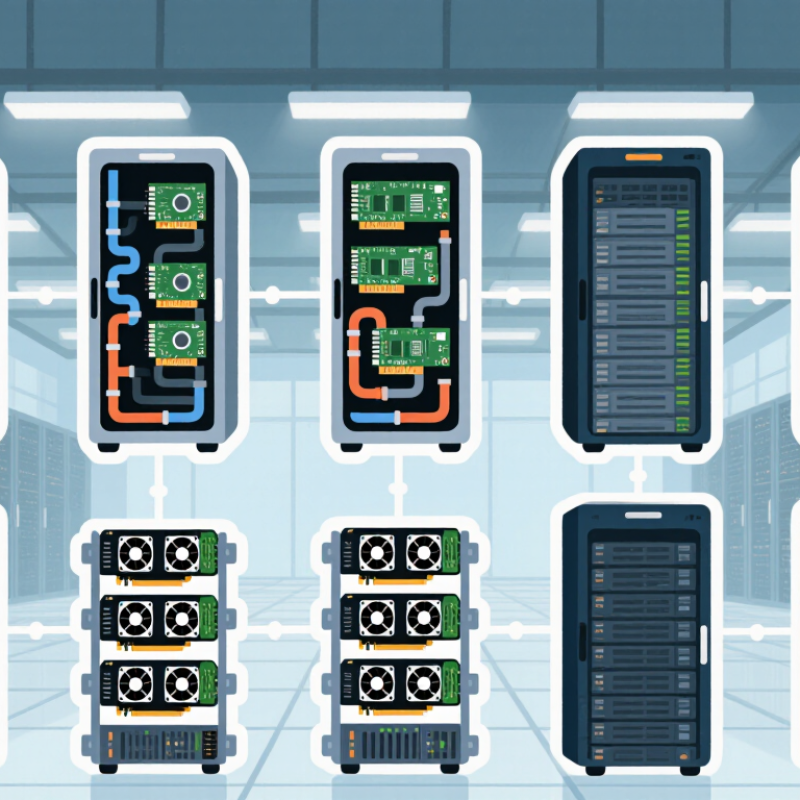
10 Best AI Computing Server Manufacturers for Global Buyers

How AI Computing Servers Support Modern Workloads

AI computing servers support modern workloads by combining high-density processors, fast memory, and accelerated data movement. They handle model training, real-time inference, simulation, and large-scale analytics more efficiently than general-purpose systems. A well-designed server can process thousands of images while keeping response times stable.

In practical deployments, memory capacity often matters as much as processor speed. Large language models may require substantial memory before training even begins. High-speed storage reduces data loading delays, while fast network connections support distributed computing across multiple servers. Latency matters. Heat follows.

Cooling design directly affects reliability. A server running continuously in a warm rack may reduce performance to protect its components. Proper airflow, power planning, and monitoring help prevent this problem. Experienced administrators usually track temperature, energy use, error rates, and workload behavior together. One measurement rarely explains the full situation.

Security and serviceability also shape purchasing decisions. Buyers should examine firmware controls, access management, warranty terms, and replacement procedures. Clear documentation supports safer maintenance and more predictable operations. However, no configuration fits every workload. Some systems offer impressive peak performance but waste energy during lighter tasks. Others cost less initially but require more upgrades later. That trade-off remains easy to underestimate when comparing technical specifications alone.

Key Criteria for Evaluating Global Server Manufacturers

Choosing an AI computing server manufacturer requires more than comparing processor counts. Global buyers should inspect performance per watt, thermal design, memory bandwidth, and accelerator compatibility. A fast server that throttles in a warm rack becomes an expensive disappointment. Power tells only half the story.

The International Energy Agency’s Electricity 2024 report estimated that data centers consumed about 460 TWh globally in 2022. High-growth scenarios could push demand above 1,000 TWh by 2026.

Therefore, buyers should request measured performance-per-watt data, not marketing estimates. Ask for test conditions, workload types, inlet temperature, and sustained operating time. Test it. Short demonstrations can hide thermal limits.

Reliability also needs evidence. Uptime Institute’s 2024 Global Data Center Survey reported that 54% of respondents experienced an outage during the previous three years. Evaluate component validation, remote monitoring, firmware controls, spare-parts availability, and regional service response. Security documentation matters too, including vulnerability handling and supply-chain traceability. Procurement teams should compare warranty terms across countries, because replacement delays can erase a low purchase price. Independent certifications help, but they do not replace customer references. No scorecard is perfect. I would reserve part of the evaluation for practical pilot testing, where network latency, fan noise, rack density, and maintenance access reveal uncomfortable details.

Ten Leading AI Computing Server Manufacturers

The ten leading AI computing server manufacturers serve different workloads, budgets, and deployment environments. Strong suppliers usually offer dense GPU servers, high-speed networking, and flexible storage options. Their systems support model training, inference, scientific research, and industrial analytics. Practical experience shows that cooling design often matters as much as raw computing power. A server can look impressive on paper yet throttle under sustained workloads. Buyers should examine thermal tests, warranty terms, firmware support, and regional service coverage.

Tips: Request workload-based benchmarks. Check power limits. Confirm rack depth and noise levels. Ask about spare parts.

Reliable manufacturers publish clear specifications and explain performance limits. They should document GPU compatibility, memory expansion, and network latency. Independent testing adds useful evidence, especially when vendor claims seem unusually strong. I would also inspect management software before ordering. Difficult monitoring tools can increase operating costs later. No shortlist is perfect. Local electricity prices, technician availability, and import procedures may change the final choice. A careful buyer should compare complete deployment costs, not only the server invoice. Even a lower-priced system may require extra cooling, cables, licenses, or onsite support. That detail is easy to miss.

Comparing Performance, Scalability, and Total Cost

Choosing among the 10 best AI computing server manufacturers requires more than reading peak benchmark scores. A serious evaluation should test FP16 and FP8 throughput, memory bandwidth, network latency, and inference speed under sustained workloads. MLPerf Training results provide useful comparisons, but they do not represent every model or deployment pattern. A server that wins a short benchmark may struggle during overnight training. That matters.

Scalability changes the calculation. Buyers should examine rack density, cooling design, interconnect expansion, remote management, and replacement procedures. The International Energy Agency reported that data centers consumed about 460 TWh of electricity globally in 2022. Demand could exceed 1,000 TWh by 2026. Power matters. The 2024 United States Data Center Energy Usage Report also projected national data center consumption could reach 325–580 TWh by 2028. These figures make energy efficiency a financial issue, not only an environmental one.

Total cost of ownership should include servers, accelerators, electricity, cooling, software licenses, staffing, downtime, and hardware refresh cycles. A lower purchase price can hide expensive power requirements. Some datasheets still present optimistic utilization assumptions. I would not trust one benchmark. Measure a representative workload for at least several days, including failed jobs and idle periods. The imperfect result is often the most useful one.

Choosing the Right AI Server Manufacturer for Your Needs

Choosing an AI server manufacturer requires more than comparing processor counts. IDC forecast global AI infrastructure spending at about $154 billion in 2024, showing how quickly procurement decisions are becoming strategic. Buyers should test real workloads, including model training, inference, storage access, and distributed communication.

Thermal engineering deserves close attention. IEA’s Electricity 2024 report estimates data-center electricity demand could reach 620–1,050 TWh by 2026. A reliable manufacturer should provide measured power profiles, airflow diagrams, cooling limits, and rack-density guidance. Ask for benchmark conditions, not only impressive peak results. Small details matter.

Service quality can decide deployment success. Evaluate spare-parts locations, response times, firmware controls, warranty terms, and technician coverage. Check whether the manufacturer supports your preferred operating systems, accelerators, networking standards, and orchestration tools. During practical evaluations, a simple replacement test can reveal more than a polished presentation. I would also request references from installations with similar workloads. One weakness remains easy to miss: promised performance may change under sustained heat or mixed workloads. Recheck it independently. That extra step may feel inconvenient, but it protects long-term cost, uptime, and operational trust.

10 Best AI Computing Server Manufacturers for Global Buyers - Choosing the Right AI Server Manufacturer for Your Needs

Rank Manufacturer Profile Primary Strength Typical GPU Capacity per Server Supported Server Formats Global Delivery Coverage Customization Level Best-Fit Buyer Overall Score
1 Profile A High-density accelerated computing 4–8 1U, 2U, 4U, 8U Worldwide Very High Large AI data centers 9.6/10
2 Profile B Enterprise AI infrastructure 2–8 1U, 2U, 4U, 8U Worldwide High Corporate IT departments 9.4/10
3 Profile C Flexible cloud and AI cluster designs 2–8 1U, 2U, 4U, 8U Worldwide Very High Cloud service providers 9.2/10
4 Profile D GPU-optimized rack systems 4–8 2U, 4U, 8U Worldwide High AI model training teams 9.1/10
5 Profile E Balanced performance and operating cost 1–4 1U, 2U, 4U Worldwide Medium–High Universities and laboratories 8.9/10
6 Profile F AI inference and edge deployment 1–4 1U, 2U, Tower Regional and global High Retail and industrial deployments 8.7/10
7 Profile G Cost-efficient high-performance computing 2–4 2U, 4U Regional and global Medium–High Startups and growing businesses 8.5/10
8 Profile H Liquid-cooled AI computing platforms 4–8 2U, 4U, 8U Global through partners Very High High-density data centers 8.4/10
9 Profile I Small and medium-sized AI clusters 1–4 1U, 2U, Tower Regional and global Medium SMEs and research groups 8.2/10
10 Profile J Specialized workstation and visualization systems 1–2 Tower, 2U Regional and global Medium Design, simulation and development teams 8.0/10
Evaluation criteria: Scores reflect a practical comparison of GPU scalability, system flexibility, cooling capability, international service coverage, customization, and suitability for common AI workloads. Actual specifications, lead times, and service terms should be verified for each project.

FAQS

What should buyers compare when selecting an AI server manufacturer?

Compare workload performance, cooling, networking, storage, warranty coverage, and regional service. Processor counts alone can mislead. Request benchmarks using your actual training and inference tasks.

Why is cooling important for AI servers?

AI workloads can run continuously and generate intense heat. Poor cooling may cause throttling, lower performance, or unexpected downtime. Ask for airflow diagrams, measured power profiles, and rack-density limits.

Which workload tests should buyers request?

Test model training, inference, storage access, and distributed communication. Use realistic data sizes and sustained workloads. Peak results are not enough.

How can buyers estimate the complete deployment cost?

Include electricity, cooling, cables, licenses, spare parts, and onsite support. A cheaper server may require expensive infrastructure changes. The invoice tells only part of the story.

What service details deserve close attention?

Check spare-parts locations, response times, firmware support, warranty terms, and technician availability. Ask how quickly a failed power supply can be replaced. Small delays can become costly.

How should buyers evaluate compatibility?

Confirm accelerator support, memory expansion, operating systems, networking standards, and orchestration tools. Check rack depth and noise levels. A system may fit technically but fail operationally.

What evidence is more useful than a polished sales presentation?

Independent testing and references from similar deployments provide stronger evidence. Request benchmark conditions and thermal results. A simple component replacement test can reveal practical weaknesses.

Can high performance guarantee long-term reliability?

No. Performance may change under sustained heat, mixed workloads, or strict power limits. Recheck important claims independently. No shortlist is perfect.

How do local conditions affect the final decision?

Electricity prices, import procedures, technician access, and facility design can change the best choice. Consider regional service coverage. I might overlook noise or maintenance time without a site inspection.

Conclusion

AI computing servers are the foundation of modern workloads such as machine learning, data analytics, scientific research, simulation, and real-time inference. This article explains how specialized processors, high-speed memory, fast storage, and advanced networking help organizations process demanding workloads efficiently. It also introduces the key criteria for evaluating an ai computing server manufacturer, including computing performance, system flexibility, energy efficiency, reliability, security, technical support, and long-term supply capability.

The guide presents ten leading categories of manufacturers for global buyers and compares their approaches to performance, scalability, manageability, and total cost of ownership. Rather than focusing only on initial purchase price, it considers deployment, maintenance, power consumption, software compatibility, expansion options, and future upgrade requirements. By examining workload size, budget, data-center conditions, integration needs, and expected growth, organizations can choose an ai computing server manufacturer that delivers balanced performance, dependable operation, and sustainable value for their specific business or research goals.

Isabella

Isabella

Isabella is a dedicated marketing professional with a sharp focus on driving brand growth and engagement through strategic content creation. With an extensive background in digital marketing, she combines her passion for storytelling with her keen understanding of industry trends to deliver......